
In football, the most important moments rarely come from what is obvious. A pass is not dangerous because of who receives it, but because of what that player is trying to do, how others react, and where space is about to open.
Yet much of analysis—both on and off the pitch—still focuses on what can be easily named: positions, player roles, or visible actions. This often misses the deeper layer of the game, where decisions are shaped by intention, movement, and relationships between players.
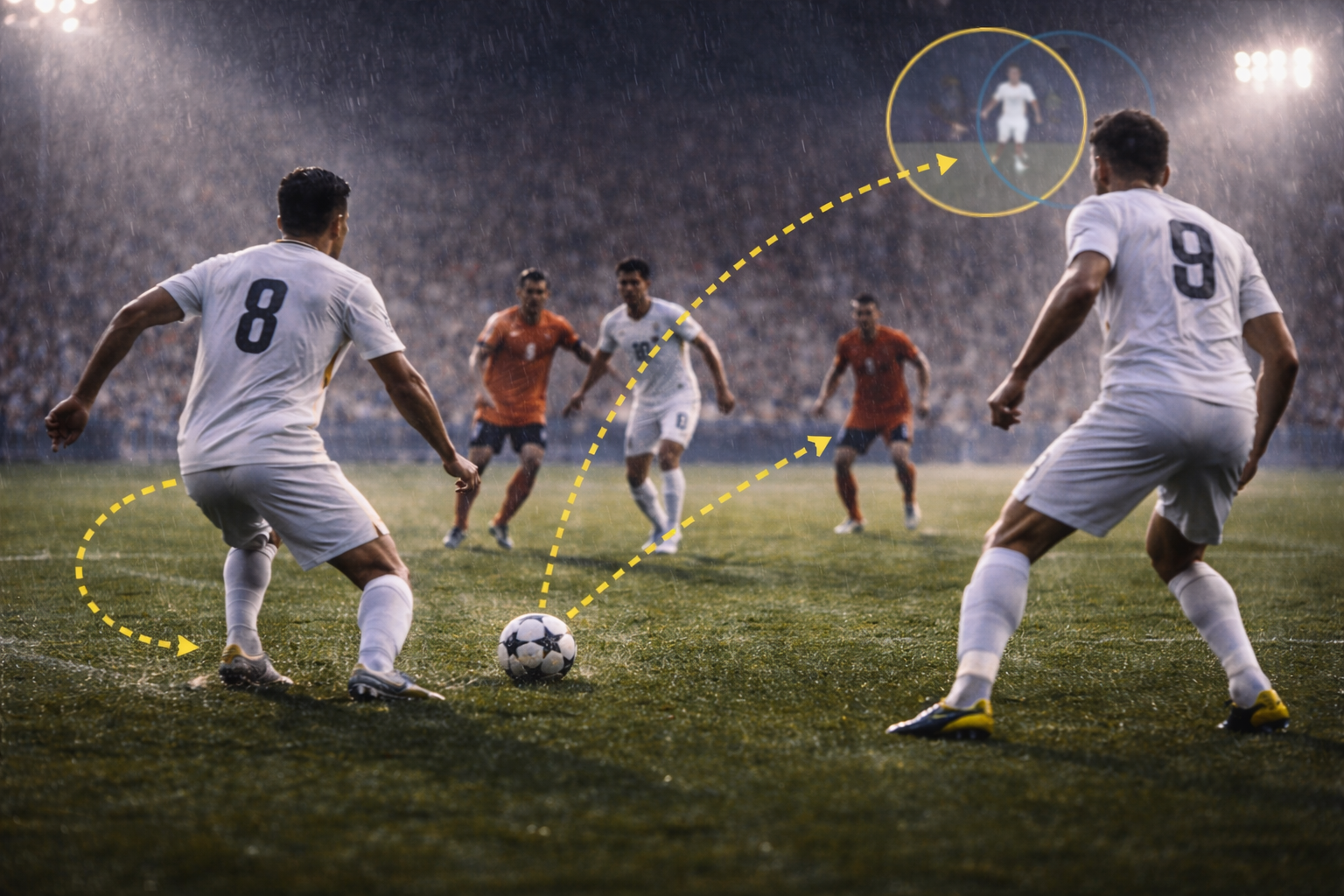
Beyond Labels: Understanding the Situation
Traditional analysis tends to work like this: identify the player, recognize the action, and evaluate the outcome. It’s effective, but limited.
A more advanced approach asks different questions:
- Who is creating space, even without touching the ball?
- Which movement is drawing defenders out of position?
- What is the intention behind the next pass?
These are not always obvious. They require reading the scenario, not just the visible event.
The Challenge of Context
In real matches, situations are rarely clean. Multiple players occupy similar spaces, movements overlap, and distractions are everywhere.
For example:
- Two attackers make runs, but only one is meant to receive
- A midfielder appears open, but is actually baiting pressure
- A defender steps forward not to win the ball, but to close a passing lane
Understanding these moments depends on context—how players relate to each other and what they are trying to achieve.
Training Players to Read Scenarios
Developing this level of understanding requires more than repetition of drills. It requires exposure to complex, realistic situations.
One effective method is to present players with layered scenarios:
- Multiple options, not just one clear solution
- Distracting movements that force better decision-making
- Situations where timing and intention matter more than position
By gradually increasing the complexity, players learn to recognize patterns that are not immediately obvious.
Identifying Where Decisions Break Down
Not all mistakes are the same. Some come from poor positioning, others from misreading the situation.
Breaking down these moments helps identify specific weaknesses:
- Failing to recognize the most dangerous player
- Losing track of overlapping runs
- Misjudging space in crowded areas
- Reacting late to changes in play
Understanding these patterns allows for more targeted improvement.
Adapting to New Situations
The game is constantly changing. Opponents vary, conditions shift, and familiar patterns don’t always repeat.
Players who rely only on fixed instructions often struggle when faced with something new. Those who understand the logic of situations—why movements happen, not just where—adapt more effectively.
This is especially important when facing unfamiliar opponents or unexpected scenarios during a match.
Final Thought
Football is not just about recognizing what is happening, but understanding why it is happening.
Teams that can read the game at this deeper level—seeing intentions, relationships, and hidden patterns—gain an advantage that goes beyond tactics. They respond faster, make better decisions, and control situations that others only react to.
In the end, the difference is simple: some players see the ball, while others see the game.
Written by codexium in Canada — SOCCER coverage, published on April 5, 2026.

Leave a Reply