
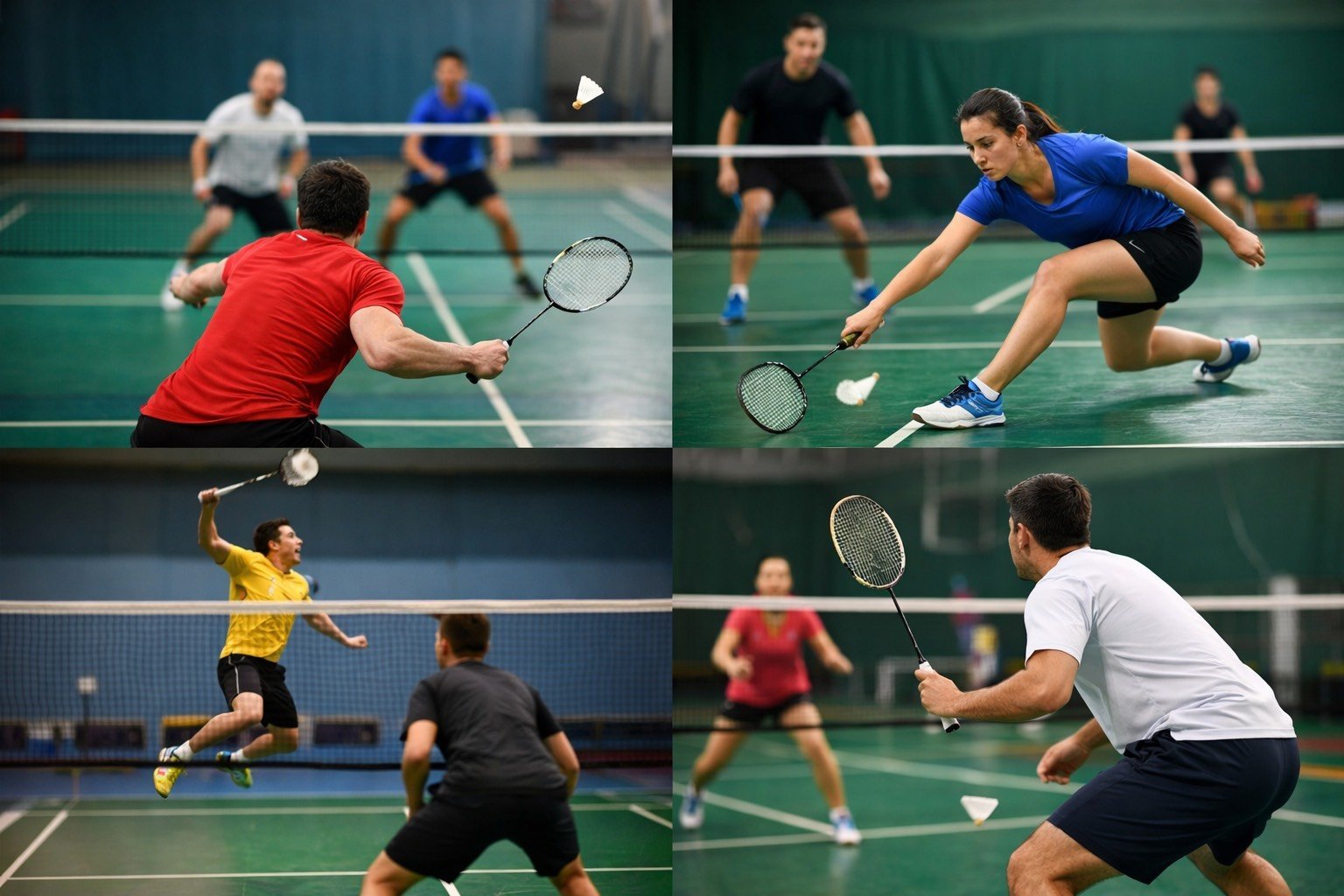
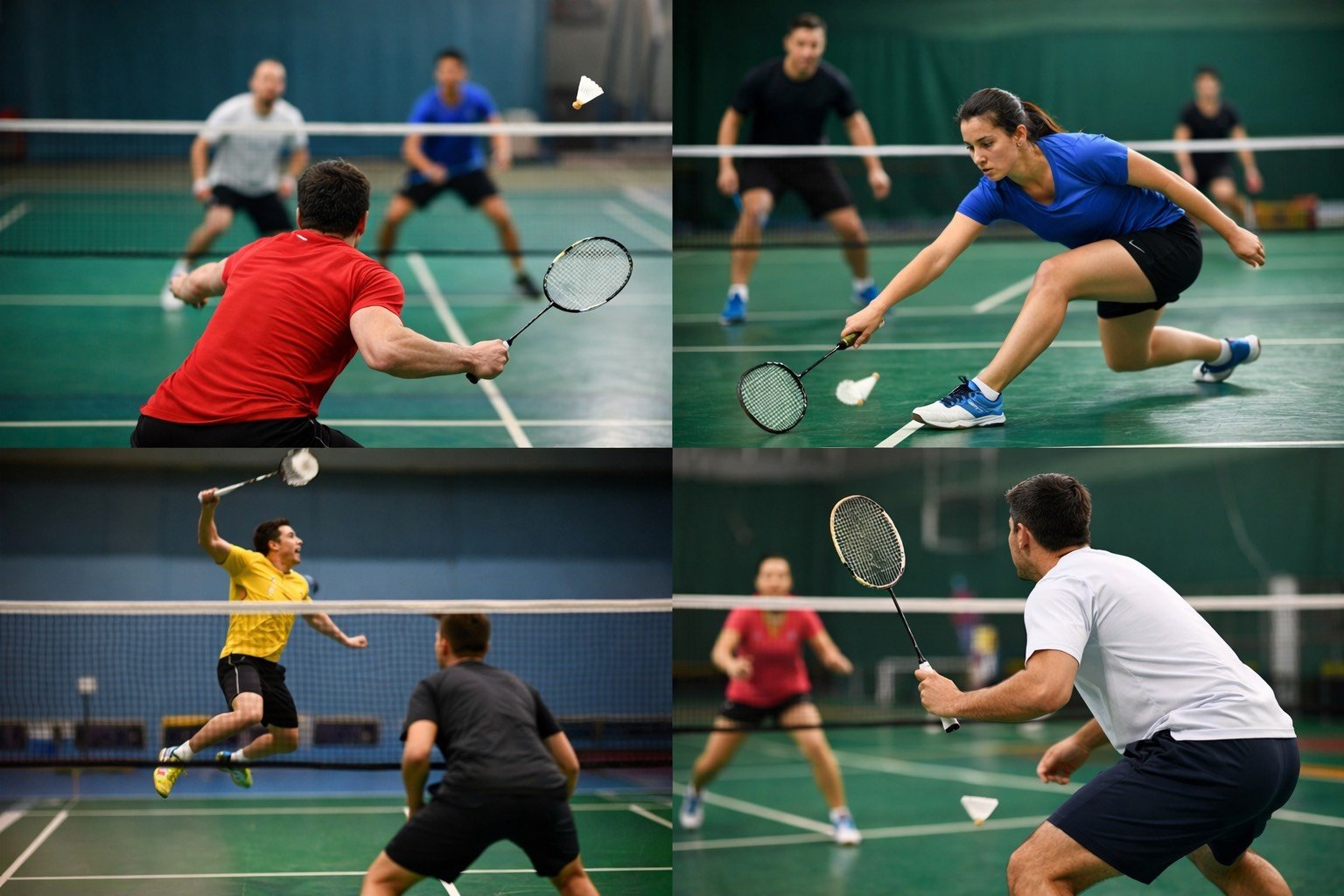
Badminton at a high level is no longer just about speed or technical precision; it is increasingly defined by how intelligently a player constructs and disrupts patterns within a rally. Traditional tactics emphasize movement, variation, and timing, but there is still room to invent new approaches that reshape how rallies are built. By rethinking how pressure is applied and how information is gathered during play, players can develop fresh, professional-level tactics that go beyond conventional training.
One emerging concept is what can be described as “progressive narrowing.” Instead of moving the opponent randomly or evenly across all areas of the court, the player begins by covering the full space and then gradually reduces the playable zones. Early in the rally, shots are distributed widely to observe balance and recovery. Once a weaker side or slower transition is identified, the player subtly biases the rally toward that region. Over several exchanges, the opponent is drawn repeatedly into a smaller corridor of movement, increasing physical and mental strain. The final attack then comes not from surprise, but from accumulated restriction, where the opponent has fewer viable responses left.
Another innovative tactic is “tempo disguise through consistency.” Rather than using obvious changes in speed to create openings, the player maintains a steady rhythm for most of the rally. Clears, drops, and drives are executed with similar preparation and pacing, creating a predictable flow. At a chosen moment, a sudden acceleration—such as a fast push or a steep attacking shot—is introduced without any visible change in technique. Because the opponent has adapted to the established rhythm, this subtle break in tempo is far more disruptive than constant variation. The effectiveness lies in conditioning the opponent first, then breaking that expectation at the right time.
A further development can be called “reverse pressure creation.” In standard play, pressure is applied by forcing the opponent into difficult positions. In this variation, the player intentionally offers slightly neutral or even inviting shots, encouraging the opponent to attack. However, these shots are carefully controlled to limit angles and maintain balance. As the opponent commits to offense, they expose their own positioning, allowing for immediate counterattacks into open space. This tactic shifts the psychological burden, turning the opponent’s aggression into a liability rather than a strength.
Another refined idea is “recovery manipulation.” Instead of focusing only on where the shuttle lands, the player targets how the opponent recovers after each shot. For example, a deep shot followed by a tight net reply is not just about front-back movement, but about forcing inefficient footwork patterns. By repeatedly exploiting moments when the opponent is transitioning—rather than when they are stationary—the player creates continuous instability. Over time, this leads to delayed reactions and weaker returns, even if no single shot appears overwhelmingly difficult.
Finally, there is the concept of “silent pressure,” where the player minimizes risk while steadily increasing control of the rally. This involves precise placement, high consistency, and disciplined shot selection that avoids unnecessary errors. The opponent, sensing fewer opportunities to attack, may begin to force the play, leading to mistakes. Unlike aggressive tactics that rely on visible dominance, silent pressure works through patience and reliability, gradually shifting the burden of risk onto the other side of the court.
These newly framed tactics share a common principle: they prioritize structure, observation, and gradual advantage over immediate point-winning attempts. By integrating these ideas into training and match play, a player can develop a more sophisticated tactical identity—one that not only responds to the game but actively shapes it.
Written by lawlithic in China — BADMINTON coverage, published on April 6, 2026.

Leave a Reply