

I approach the game by thinking in terms of controlled shifts rather than staying in one constant mode. Just like systems that behave differently under changing conditions, I adjust how I play depending on the “state” of the game—score, pitcher rhythm, and defensive setup.

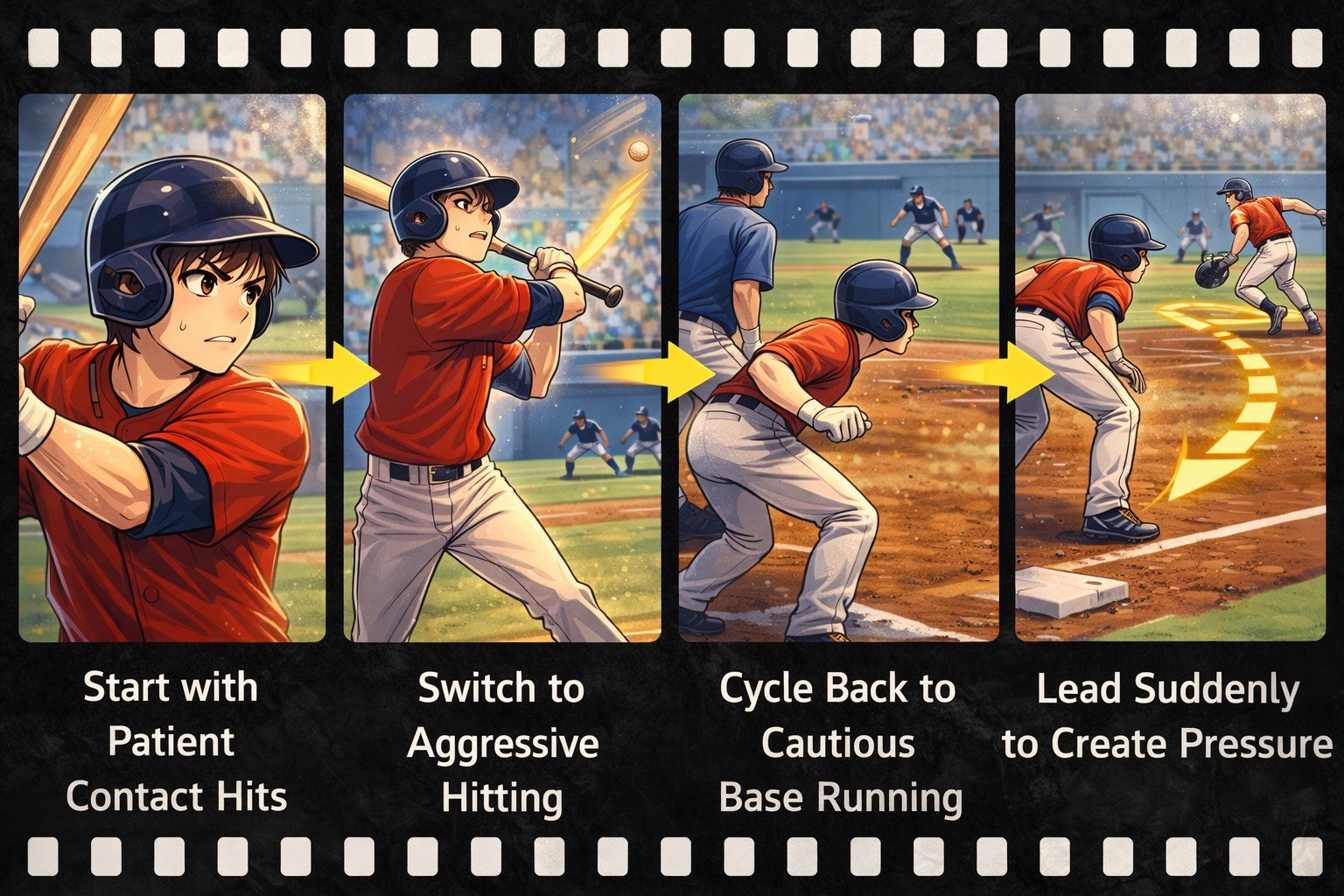
When I’m batting, I don’t lock into one style. I start in a calm, low-intensity mode, focusing on reading the pitcher—timing, release, and pitch patterns. Once I recognize a pattern or feel the pitcher settling, I switch sharply into an aggressive mode. That might mean attacking early in the count or aiming for extra-base hits. The key is that the shift is sudden and intentional, not gradual. This makes it harder for the pitcher to adapt because just as they get comfortable, I’ve already changed my approach.
Sometimes I even return to a controlled style after being aggressive. If I notice the pitcher adjusting to my power swings, I go back to simple contact or patience. This back-and-forth switching creates a cycle where the pitcher never fully stabilizes. I’m not just reacting—I’m forcing repeated adjustments.
On the bases, I use a similar idea. I stay quiet and still for a while, letting the defense relax and assume nothing is happening. Then, without warning, I increase pressure—taking a lead, attempting a steal, or forcing movement. After that, I may return to a passive stance again. By alternating between stillness and action, I create uncertainty, and that often leads to hesitation or mistakes from the defense.
If I’m pitching, I focus on avoiding smooth, predictable flow. Instead of building a steady rhythm, I intentionally vary my delivery and pitch choices in a way that feels uneven to the batter. I might throw two similar pitches, then suddenly change speed or location without warning. The goal is to prevent the batter from finding a stable timing pattern. Every time they think they’ve adjusted, I shift again.
In the field, I pay attention to how the game is evolving, not just what’s standard. If I see repeated tendencies—like a hitter adjusting to inside pitches—I reposition slightly before the next play. These small changes build over time and help me stay aligned with what’s actually happening, not just what’s expected.
Overall, I treat the game as something that moves through different phases. I don’t stay in one mode for too long. By switching between control and aggression, stillness and pressure, I create a pattern that feels unpredictable to the opponent but is fully intentional on my side. That constant shifting gives me an edge because I’m always one step ahead of the game’s current state.
Written by codexgrid in Croatia — BASEBALL coverage, published on April 6, 2026.

Leave a Reply