
Introduction
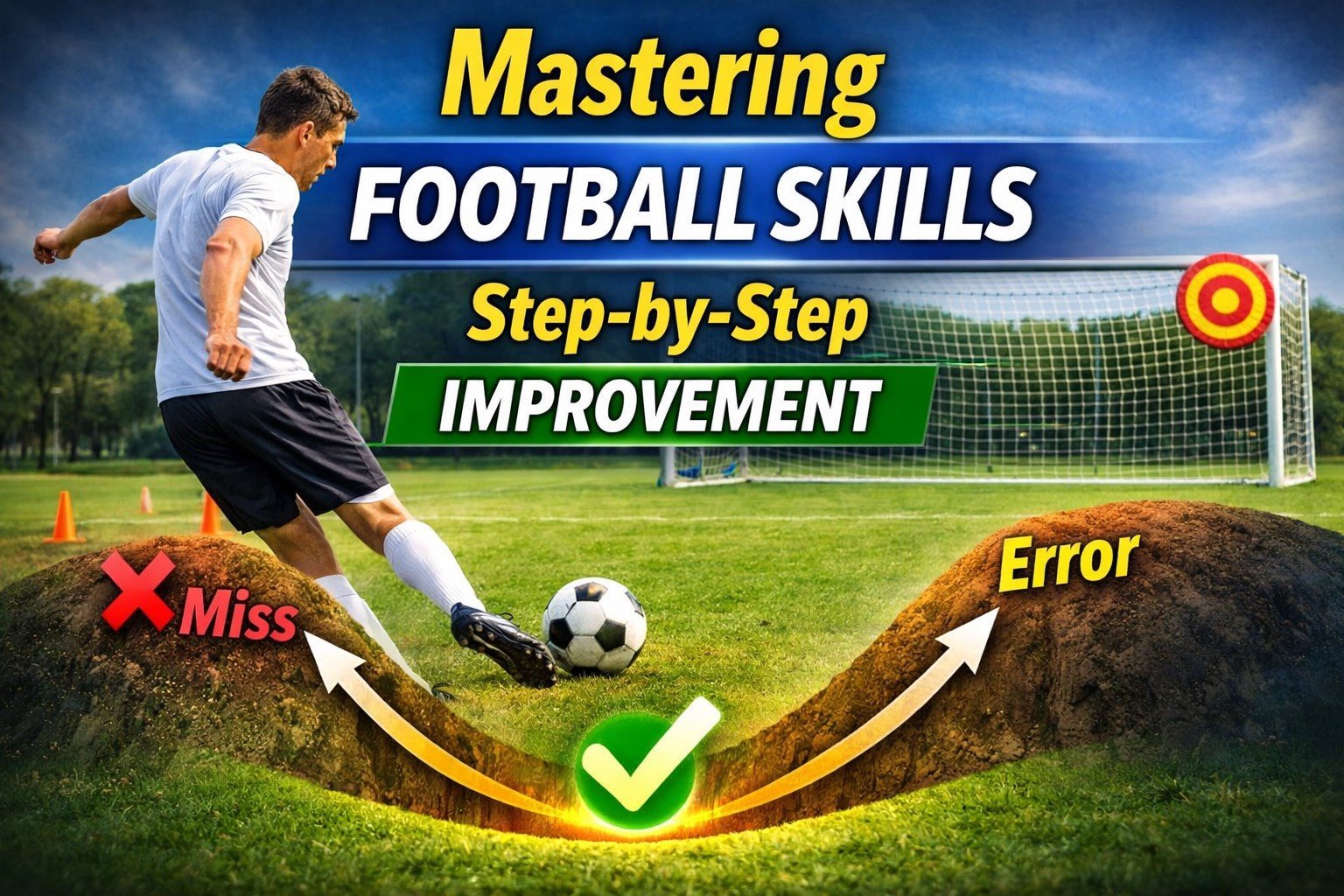
Mastering a new move in football—whether it’s a free kick, a dribble, or a precise finish—is rarely about getting it right on the first try. Instead, it’s a process of trial, feedback, and gradual improvement.
Interestingly, this process closely mirrors a powerful concept in machine learning called gradient descent, which is widely used to train intelligent systems.
The Goal: Perfect Execution
Every player starts with a clear objective:
-
Strike the ball cleanly
-
Control direction and power
-
Achieve consistent results
In simple terms, the goal is to minimize mistakes and reach the best possible performance.
Practice Through Repetition
When a player begins practicing:
-
They attempt the move
The first few tries are often imperfect—shots may go wide, too high, or lack power.
-
They observe the outcome
The player notices what went wrong:
-
Too much force
-
Incorrect foot placement
-
Poor timing
-
-
They make small adjustments
Instead of changing everything at once, the player tweaks specific elements:
-
Slightly adjusts angle
-
Reduces power
-
Improves positioning
-
-
They repeat the process
With each repetition, performance improves gradually.
This cycle continues until the move becomes natural and consistent.
Moving “Closer” With Every Attempt
Think of performance like a scale:
-
At one end: large errors and poor execution
-
At the other: precision and control
Each correction a player makes brings them closer to the ideal outcome.
This steady improvement is similar to moving step by step toward a better solution.
The Importance of Small Adjustments
Progress depends on how much the player adjusts each time:
-
Large changes can lead to overcorrection and new mistakes
-
Very small changes may slow progress
Finding the right balance is essential for steady improvement.
When Progress Slows Down
At some point, the player may reach a level where:
-
The move works fairly well
-
But it’s not yet perfect
This stage can feel like a plateau. To improve further, the player may need:
-
New training drills
-
Coaching feedback
-
A different perspective
Why This Analogy Matters
The process of learning a football move highlights an important idea:
-
Improvement is not random
-
It is guided by feedback and correction
-
Progress happens step by step
This is the same principle behind how models learn in deep learning.
Conclusion
Learning a new football technique is more than repetition—it’s a structured process of refining performance through feedback.
Each attempt reduces error and brings the player closer to perfect execution.
Written by legalonix in Benin — SOCCER coverage, published on April 11, 2026.

Leave a Reply