
Hockey is one of the most physically demanding sports. It combines speed, strength, endurance, and quick recovery shifts—all performed in a cold environment that can mask dehydration. Because of this, what players eat and drink plays a major role in performance, recovery, and long-term health.
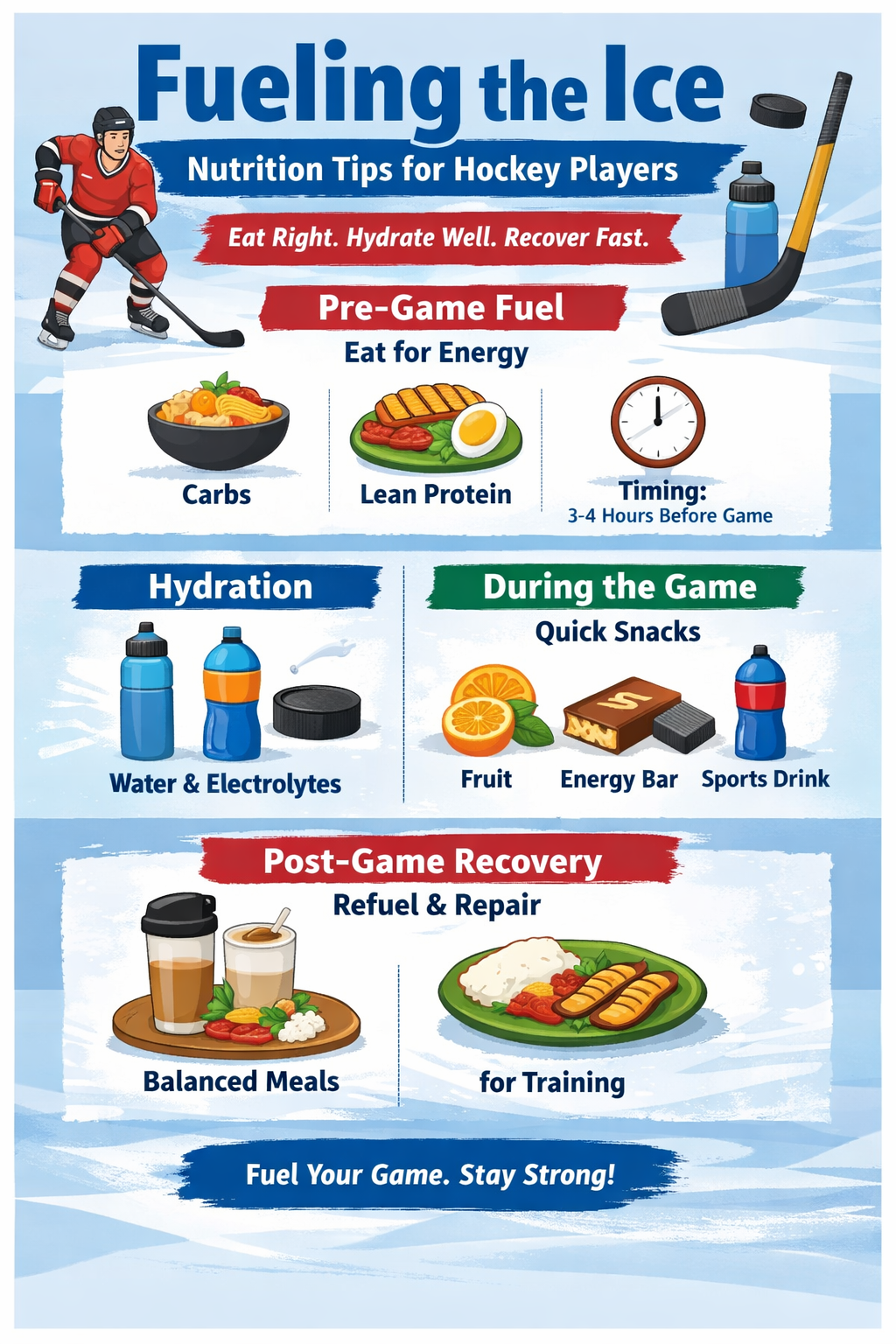
Why Nutrition Matters in Hockey
Hockey players rely on short bursts of high-intensity effort followed by brief recovery periods. This type of activity depends heavily on energy stored in the muscles (glycogen), as well as proper hydration and muscle repair. Without the right nutrition, players may feel fatigue earlier, lose focus, and increase their risk of injury.
Pre-Game Fuel: Building Energy
Eating before a game should focus on providing steady energy without causing discomfort.
-
Carbohydrates are the main fuel source. Foods like pasta, rice, whole grains, and fruits help fill energy stores.
-
Lean protein such as chicken, fish, eggs, or yogurt supports muscle function.
-
Timing matters: A full meal should be eaten about 3–4 hours before the game, while a small snack (like a banana or toast with peanut butter) can be taken 30–60 minutes before.
Avoid heavy, greasy, or overly sugary foods before playing, as they can slow digestion or cause energy crashes.
Hydration: The Hidden Key
Even though hockey is played on ice, players sweat significantly under equipment.
-
Drink water regularly throughout the day, not just during the game.
-
During games or intense training, electrolyte drinks can help replace lost salts.
-
Signs of dehydration include fatigue, headaches, and reduced performance.
During the Game: Quick Energy Support
Between periods or during longer breaks, players can benefit from quick, easy-to-digest energy sources:
-
Sports drinks
-
Fruit slices (like oranges)
-
Energy bars designed for athletes
These help maintain blood sugar levels and delay fatigue.
Post-Game Recovery: Repair and Refuel
After the game, the body needs to recover quickly for the next training session or match.
-
Protein helps repair muscle tissue. Good options include milk, smoothies, lean meats, or plant-based alternatives.
-
Carbohydrates restore energy stores. Combine them with protein for best results.
-
A recovery meal should be eaten within 30–60 minutes after playing.
Everyday Eating for Hockey Players
Consistent daily nutrition is just as important as game-day meals.
-
Eat balanced meals with vegetables, whole grains, healthy fats, and protein.
-
Maintain regular meal times to support energy levels.
-
Get enough calories to match training intensity—under-eating can reduce strength and endurance.
Final Thoughts
Good nutrition is not about strict rules or complicated plans. It is about giving the body what it needs to perform, recover, and stay strong. For hockey players, this means focusing on energy, hydration, and recovery every day—not just on game day.
When players treat food as part of their training, they gain a real advantage on the ice.
Written by normbyte in Bhutan — HOCKEY coverage, published on April 5, 2026.

Leave a Reply