
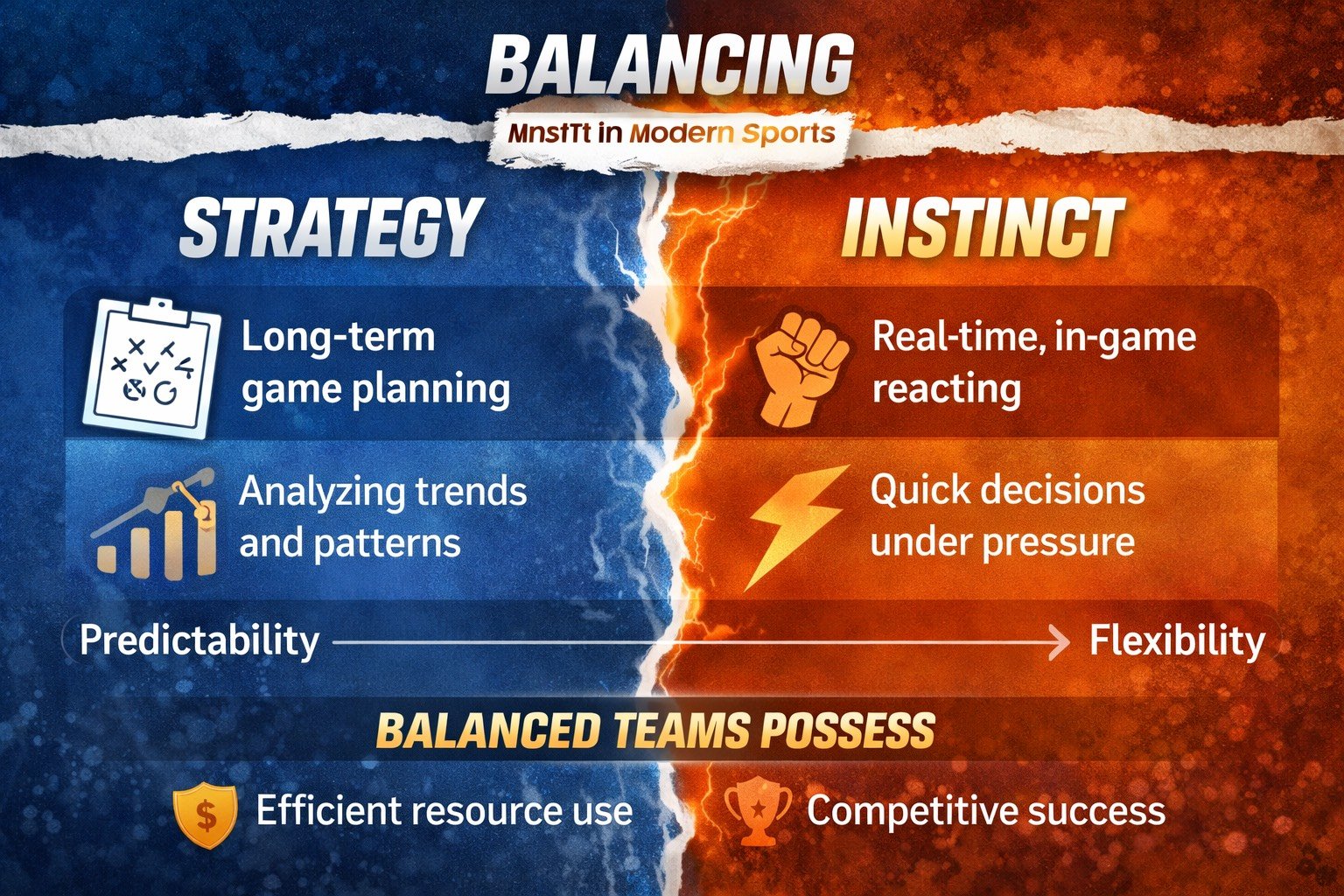
In today’s competitive sports landscape, success is rarely the result of a single approach. Teams that rely only on long-term planning may struggle to react in fast-changing situations, while those that depend purely on instinct can lack consistency over time. The most effective strategies often come from blending both foresight and quick decision-making.
Consider a football team preparing for a season. Coaches analyze past performances, player fitness trends, and opponent behavior to anticipate how matches might unfold. This kind of preparation helps them build a solid game plan, ensuring the team is ready for expected challenges. However, no amount of preparation can fully predict what happens on the field—injuries, weather changes, or unexpected tactics can shift the game instantly.
This is where real-time decision-making becomes critical. During a match, coaches and players must adapt quickly—changing formations, making substitutions, or altering tempo. These rapid choices can determine whether a team capitalizes on an opportunity or falls behind. Yet, relying only on these reactive decisions without a strong foundation often leads to inconsistent performance.
The most successful teams combine both approaches. They use careful preparation to guide their overall strategy while maintaining the flexibility to respond instantly when conditions change. For example, a basketball team might study opponents’ scoring patterns to predict where pressure will be needed most. But during the game, players still rely on instinct to intercept passes or adjust defensive positioning in real time.
This balanced approach also helps manage resources effectively. Overcommitting energy too early in a match can leave players exhausted, while being too conservative may result in missed opportunities. By blending planned pacing with responsive adjustments, teams can maintain both efficiency and performance throughout the game.
Ultimately, modern sports reward those who can think ahead while acting in the moment. It’s not about choosing between strategy and instinct—it’s about integrating both. Teams that master this balance are better equipped to handle uncertainty, stay competitive, and achieve consistent success over time.

Written by axiomgrid in Israel — FOOTBALL coverage, published on April 5, 2026.

Leave a Reply