
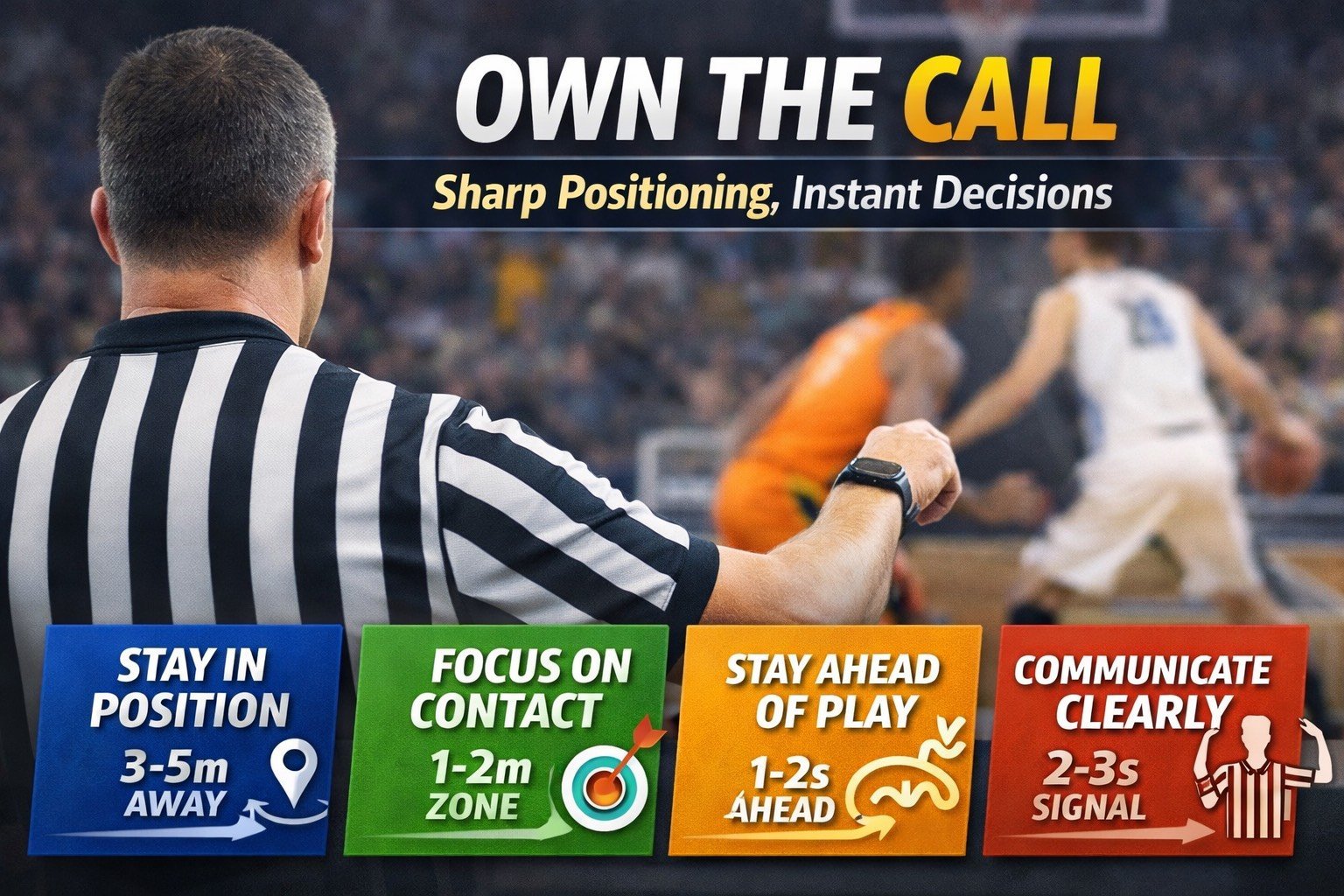
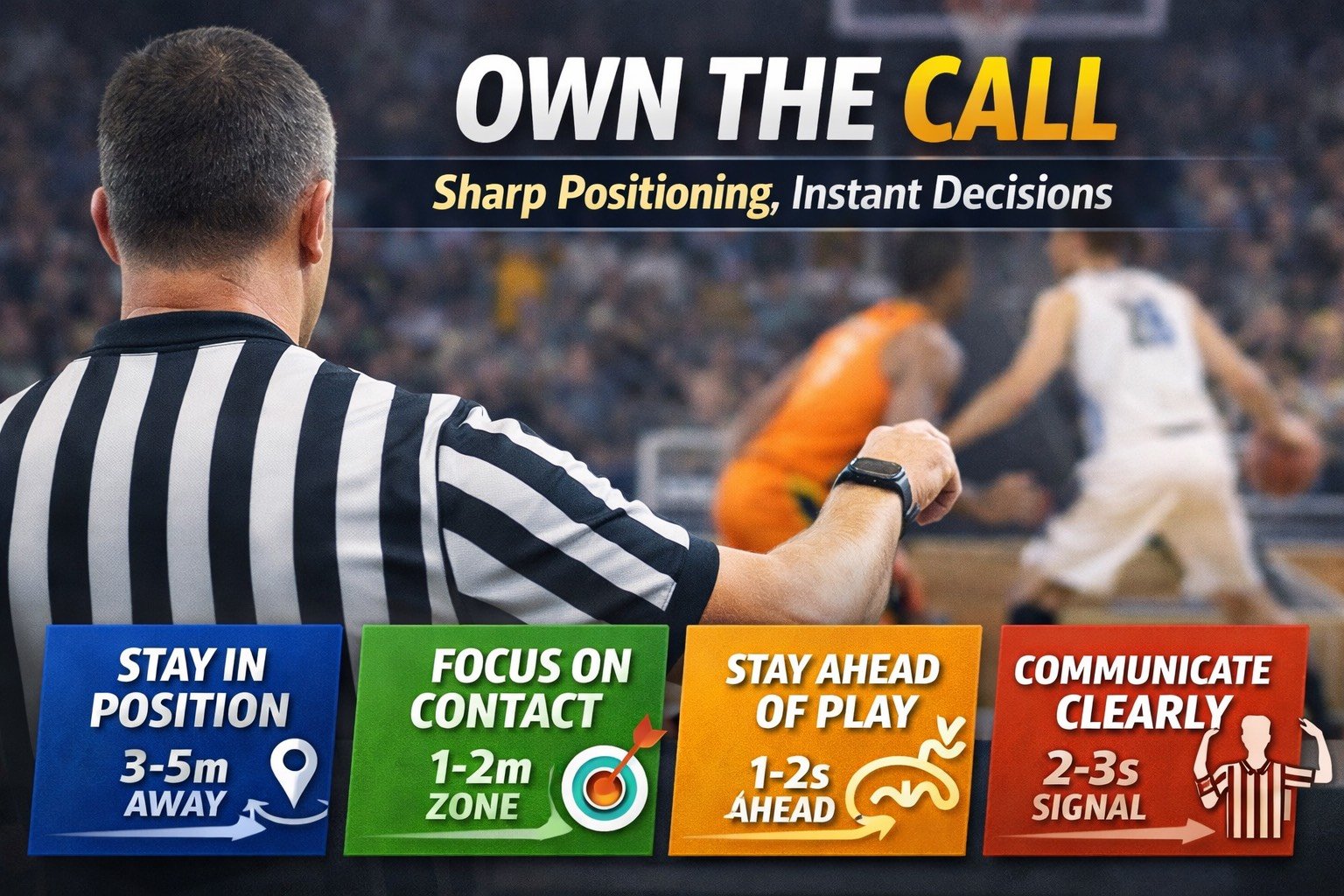
I position myself 3–5 meters from the primary action and adjust my angle to keep both the ball handler and defender within a 90° field of view. I avoid standing directly behind players and instead shift laterally by 1–2 steps to maintain a clear line of sight to contact.
I focus on key indicators only. I track the defender’s torso, the ball handler’s pivot foot, and the space between them, limiting my attention to a small zone of about 1–2 meters around the contact point. This reduces missed calls caused by distractions.
I read the play 1–2 seconds ahead by observing speed, direction, and spacing. When I see a drive or screen developing, I reposition early by moving 2–4 steps to establish a stable viewing angle before contact occurs.
I maintain flexible coverage by adjusting continuously instead of staying fixed. I rotate with the play every 2–3 passes and ensure I am never more than 6–8 meters from the key action, keeping visibility high without interfering.
I apply consistent judgment by using the same threshold for contact throughout the game. I evaluate whether displacement or advantage is created, rather than reacting to noise or reactions, and I make the decision within 1 second of the event.
I communicate clearly using strong, visible signals held for at least 2–3 seconds. I use firm body posture and clear gestures so players and coaches can immediately understand the call.
I refine my positioning constantly by making small 1–2 step adjustments during live play. I stay balanced, keep my stance ready, and maintain a steady pace so I can react quickly without overcommitting.
Written by rulepoint in Kazakhstan — BASKETBALL coverage, published on April 10, 2026.

Leave a Reply