
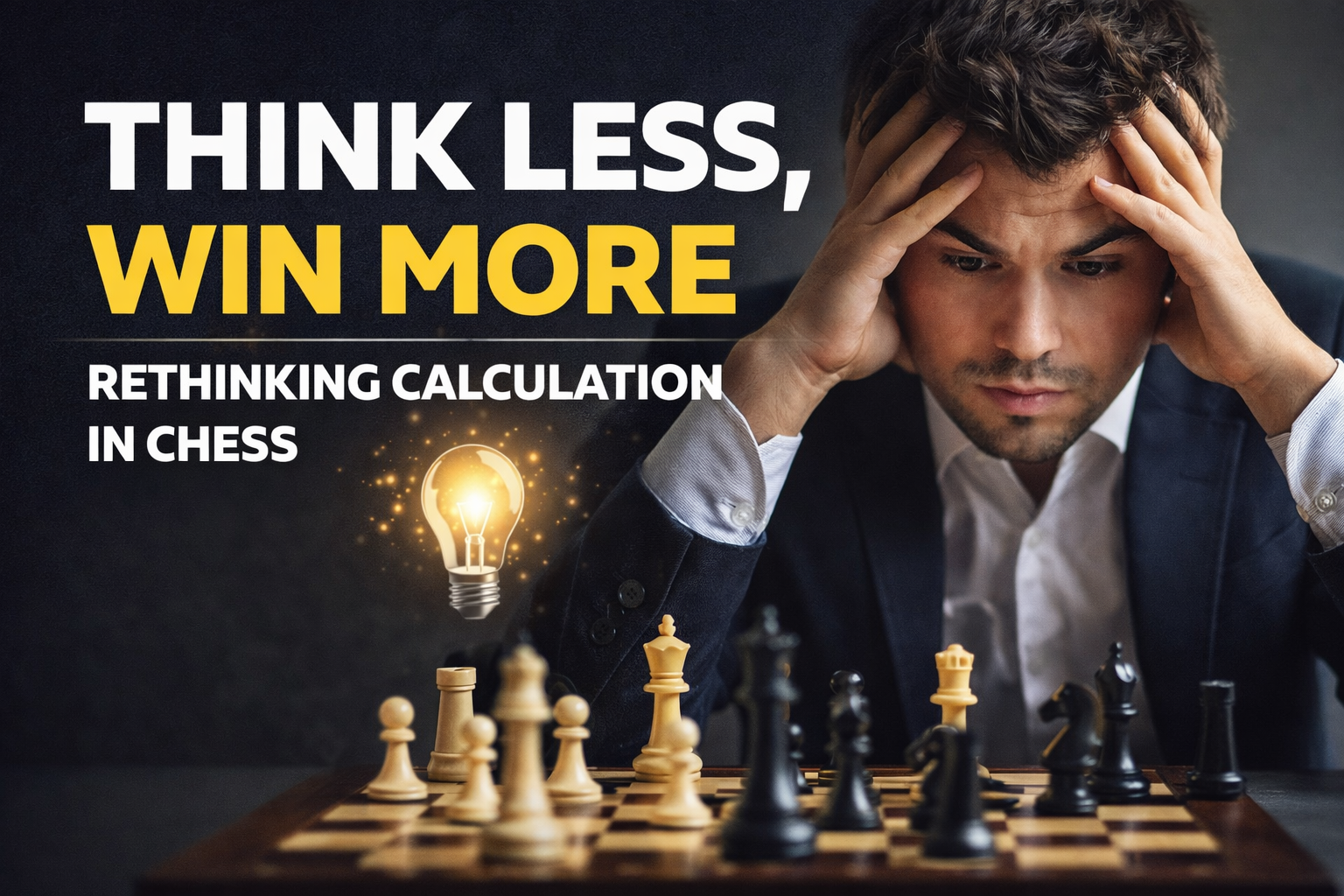
Consider a different perspective. In many positions, strong players often arrive at the right move quickly. Their intuition, built from experience and pattern recognition, points them in the correct direction early. The rest of the calculation sometimes becomes a process of verification — or, in some cases, overcomplication.
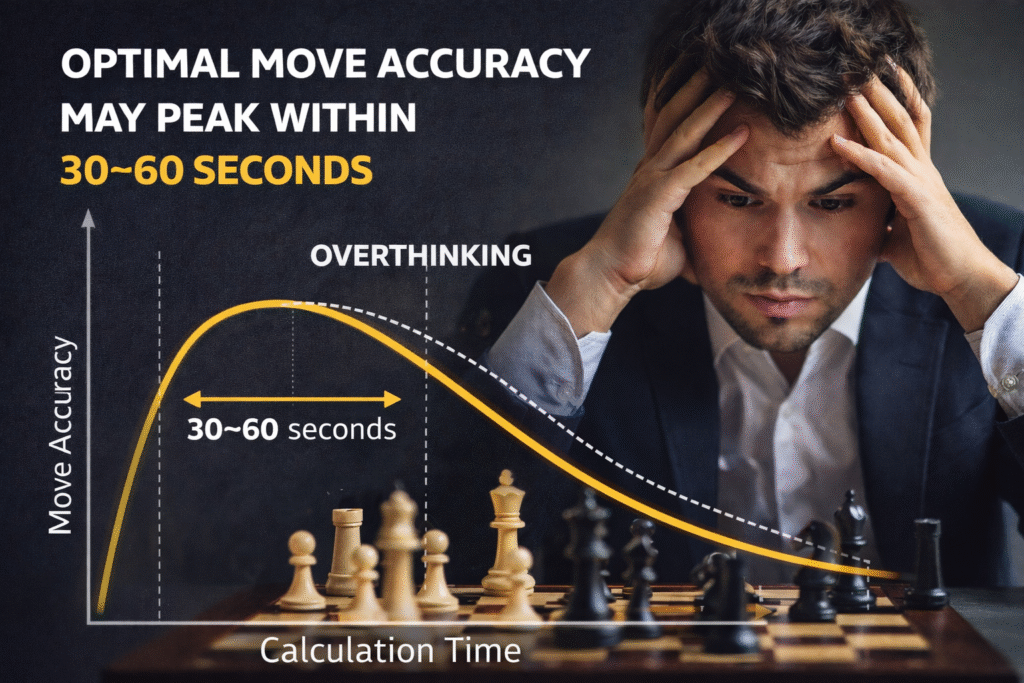
Now imagine a model of play where the key skill isn’t just calculation depth, but confidence timing — recognizing the exact moment when further analysis stops adding value.
In this framework, two types of thinking emerge. The first is efficient: a player identifies a strong candidate move, reaches a high level of confidence early, and commits. The second is less productive: the player continues calculating deeper and deeper, exploring lines that don’t meaningfully improve the decision, sometimes even introducing doubt or error.
What if elite chess players trained not only to calculate better, but to stop calculating at the right time?
This would fundamentally change preparation and in-game decision-making. Instead of maximizing depth at all costs, players would focus on the quality and trajectory of their thinking. If a line consistently reinforces confidence in a position, that may be enough. If analysis becomes scattered or uncertain, it may signal diminishing returns.
Such an approach could also improve time management. Many critical mistakes in chess occur not from lack of calculation, but from misallocated time — thinking too long in positions that didn’t require it, and too little in those that did. A structured awareness of when to stop could create a more efficient balance.
There is also a psychological dimension. Overthinking often leads to second-guessing strong initial instincts. Players may abandon correct ideas simply because they searched too long for something “better” that didn’t exist. Recognizing stable confidence early could help preserve clarity under pressure.
This raises a compelling possibility: the strongest players of the future may not be those who calculate the longest, but those who manage their reasoning most effectively — knowing when to go deeper, and when to trust the answer already in front of them.
In that sense, chess would evolve from a test of endurance in calculation to a discipline of precision in decision-making.
Written by ruleforge in Poland — CHESS coverage, published on April 7, 2026.

Leave a Reply