
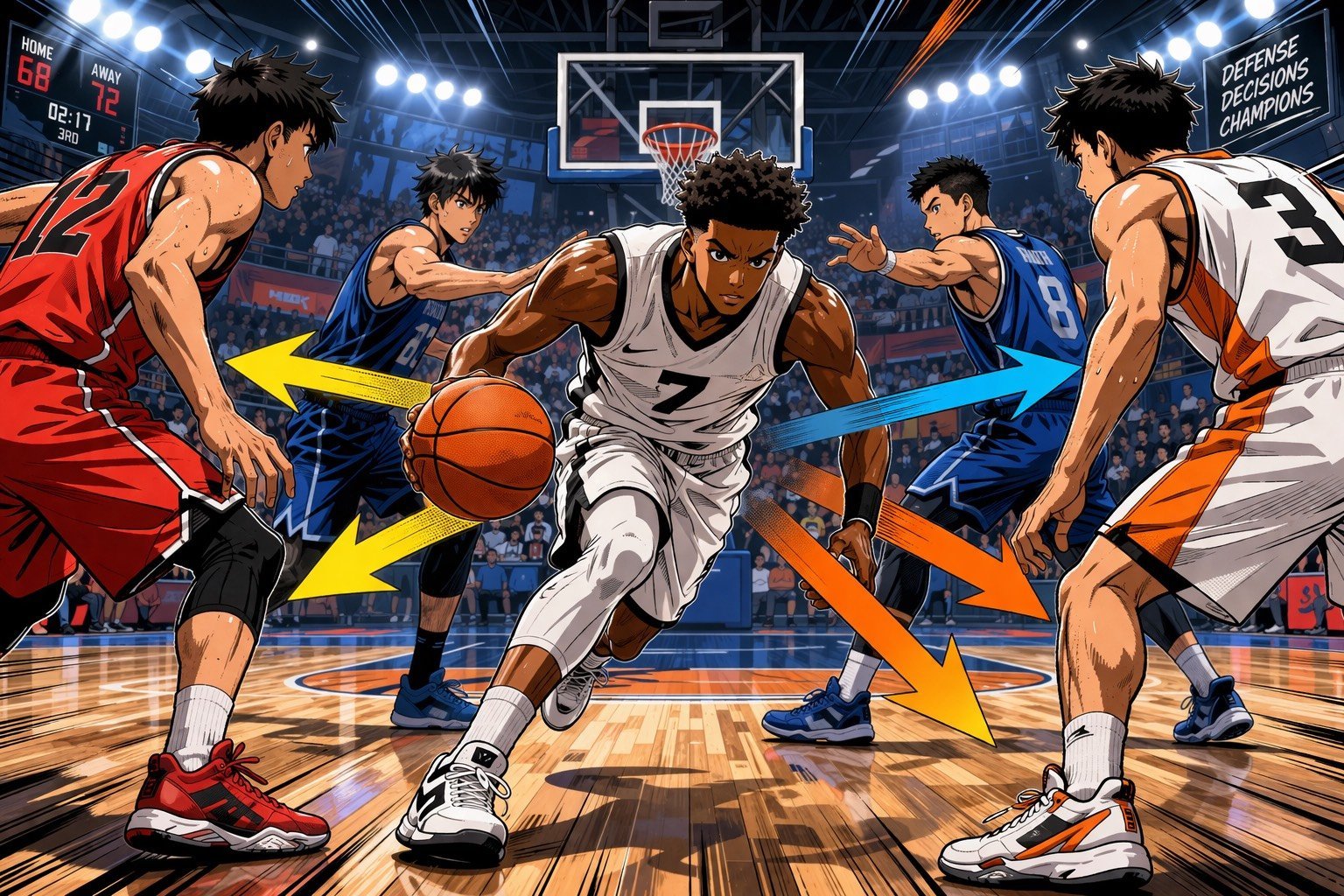
What if every player in basketball had a built-in tendency to either follow what others are doing or counter it—and it changed the outcome of the entire game?
On every possession, each player instantly reads the 4 closest players around them:
-
If most are driving → they’re likely to drive
-
If most are spacing → they drift out
-
If it’s mixed → they either stay or switch randomly
But each player has two hidden traits:
-
one that makes them copy the majority
-
one that makes them break against it
Now imagine how games evolve:
At the start, everything looks normal—sets, plays, fast breaks.
But after a few possessions, patterns begin forming on their own:
-
Teams suddenly sync into perfect spacing without calling plays
-
Defenses collapse or stretch automatically
-
Roles like “shooter” or “cutter” emerge naturally—even if players never trained for it
Then it gets strange.
No matter how messy or random the first plays are, the game keeps settling into the same types of flow:
-
balanced half-court movement
-
predictable spacing patterns
-
recurring offensive shapes
It’s like the game “forgets” how it started.
Unless you push it to extremes:
-
If everyone always copies → the whole team moves like a single unit
-
If everyone always opposes → constant breakdowns and chaotic scrambling
-
If everyone flips decisions in ties → jittery, unpredictable possessions
-
If no one ever changes → frozen, rigid formations
And sometimes, rare things happen:
A team falls into a loop—
the same cuts, passes, and rotations repeat again and again, like a glitch in the game.
In this version of basketball, skill still matters—
but the real edge is in how your tendencies interact with everyone else’s.
You’re not just playing the game.
You’re shaping the system the game becomes.
Written by ruleverse in Turkey — BASKETBALL coverage, published on April 6, 2026.

Leave a Reply