
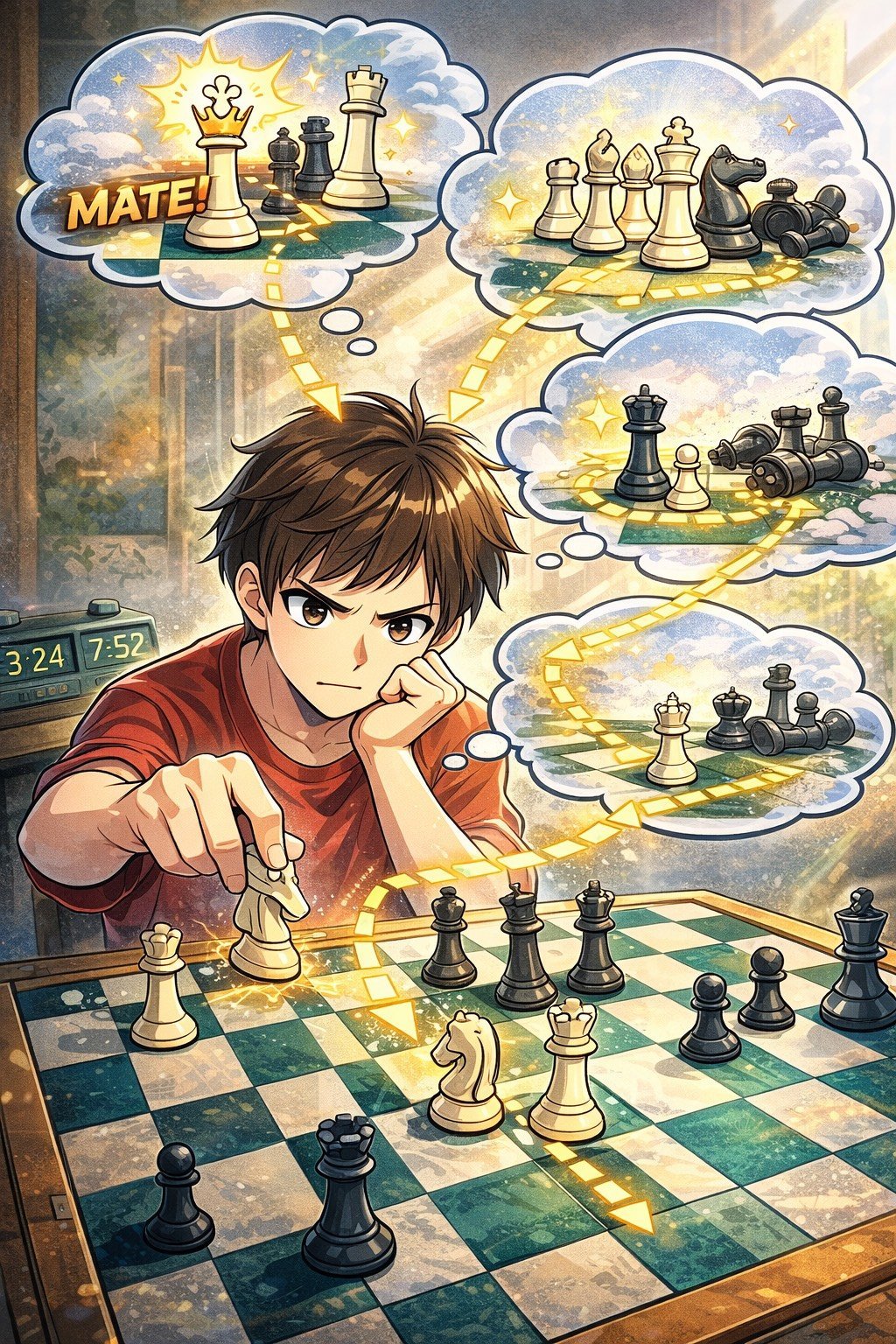
Chess has always balanced calculation with intuition, but one of the most powerful ways to rethink tactics is to imagine every position as a network of possible routes, where the goal is not just to find a good move, but to reach a winning outcome in the fewest, most efficient steps. Translating the idea of a “shortest path” into practical chess thinking leads to a set of fresh tactical concepts that prioritize directness, clarity, and minimal wasted motion.
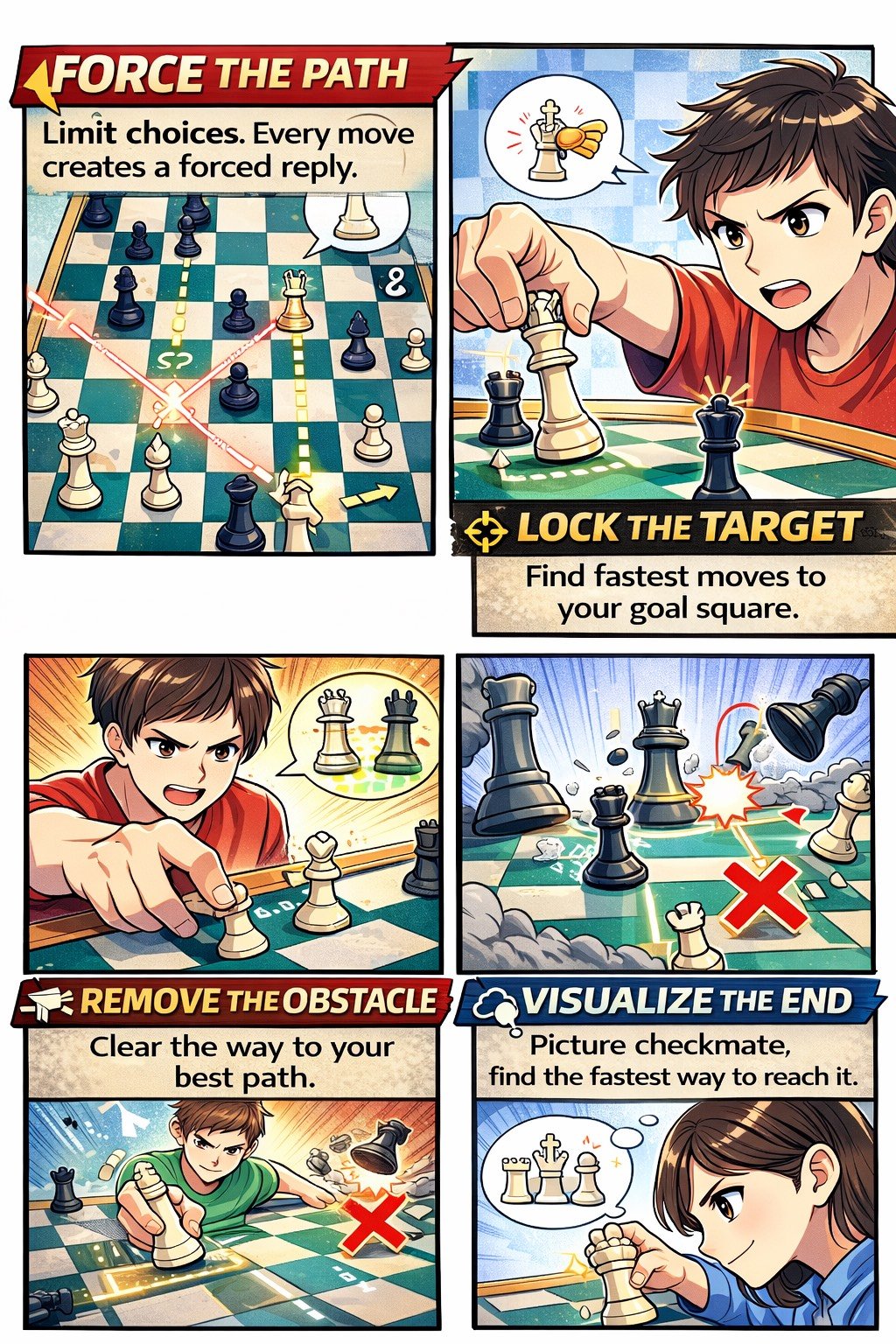
One such invention can be called “Direct Line Forcing.” Instead of exploring many candidate moves equally, the player focuses on sequences that reduce the opponent’s choices at every step. Checks, captures, and threats are not used randomly, but as tools to compress the position into a narrow path. The objective is to guide the game into a line where each move is almost forced, shortening the distance between the current position and a decisive result such as checkmate or material gain. This creates efficiency not by speed alone, but by eliminating unnecessary branches in the position.
Another tactic is “Square-to-Target Optimization.” Here, the player identifies a key square—such as a weak king position or an outpost—and calculates the quickest coordinated route for their pieces to reach it. Instead of improving pieces generally, every move is evaluated by how directly it contributes to occupying or controlling that critical square. For example, rather than making a useful but indirect move, the player may choose a sharper maneuver that brings a piece into action immediately, even if it requires temporary risk. The mindset is to minimize the number of steps needed to bring full force to the target.
A further concept can be described as “Obstacle Reduction.” In many positions, the shortest path to advantage is blocked by defensive resources—pieces guarding key squares or lines. Rather than attacking immediately, the player identifies the single most important obstacle and removes it with precision. This could involve a sacrifice, an exchange, or a forcing maneuver that clears the path. Once the obstacle is gone, the remaining sequence becomes much shorter and more direct. The emphasis is on simplifying the route before accelerating along it.
Another innovative idea is “Tempo Compression.” Instead of thinking in terms of single moves, the player groups actions into tightly connected sequences where each move carries multiple purposes. A move might develop a piece, create a threat, and restrict the opponent simultaneously. By stacking functions into each action, the player effectively reduces the number of moves needed to reach a strong position. This creates the feeling of gaining time without actually moving faster—each step simply does more work
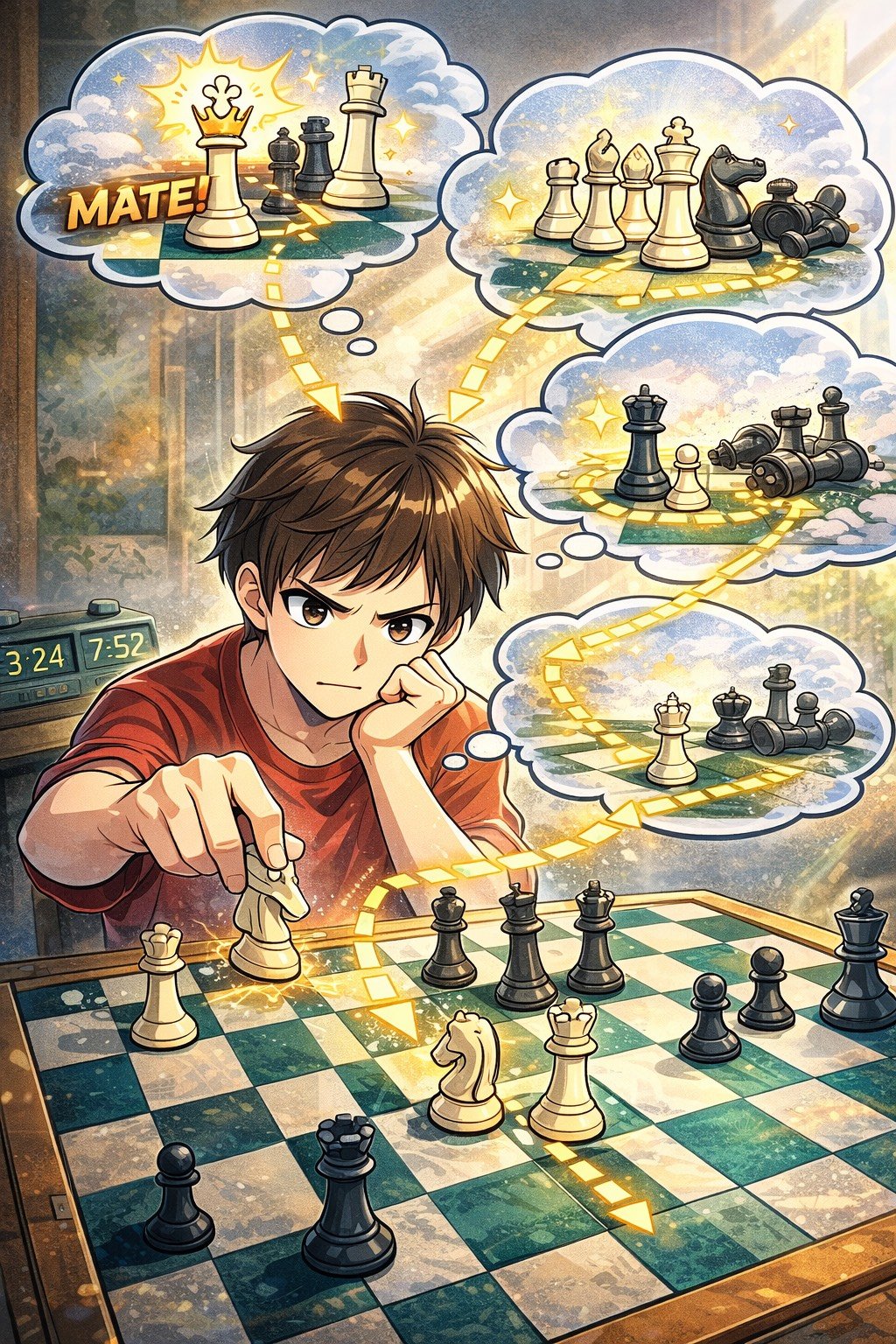
Finally, there is “End-State Visualization.” Before calculating deeply, the player briefly defines the desired final position: a trapped king, a winning endgame, or a decisive material advantage. With that endpoint in mind, they work backward to identify the most direct sequence leading there. This avoids wandering through complex variations and instead anchors calculation around a clear destination. The result is a more focused search for moves that directly contribute to that outcome.
These newly framed tactics share a common principle: efficiency over excess. By prioritizing forced lines, direct routes, and multi-purpose moves, a player can navigate complex positions with greater clarity. In practical play, this does not replace creativity, but refines it—turning calculation into a purposeful journey where every move brings the position closer to its most favorable conclusion with minimal detours.
Written by statnova in Portugal — CHESS coverage, published on April 6, 2026.

Leave a Reply